Wire and Pine Needle Baskets
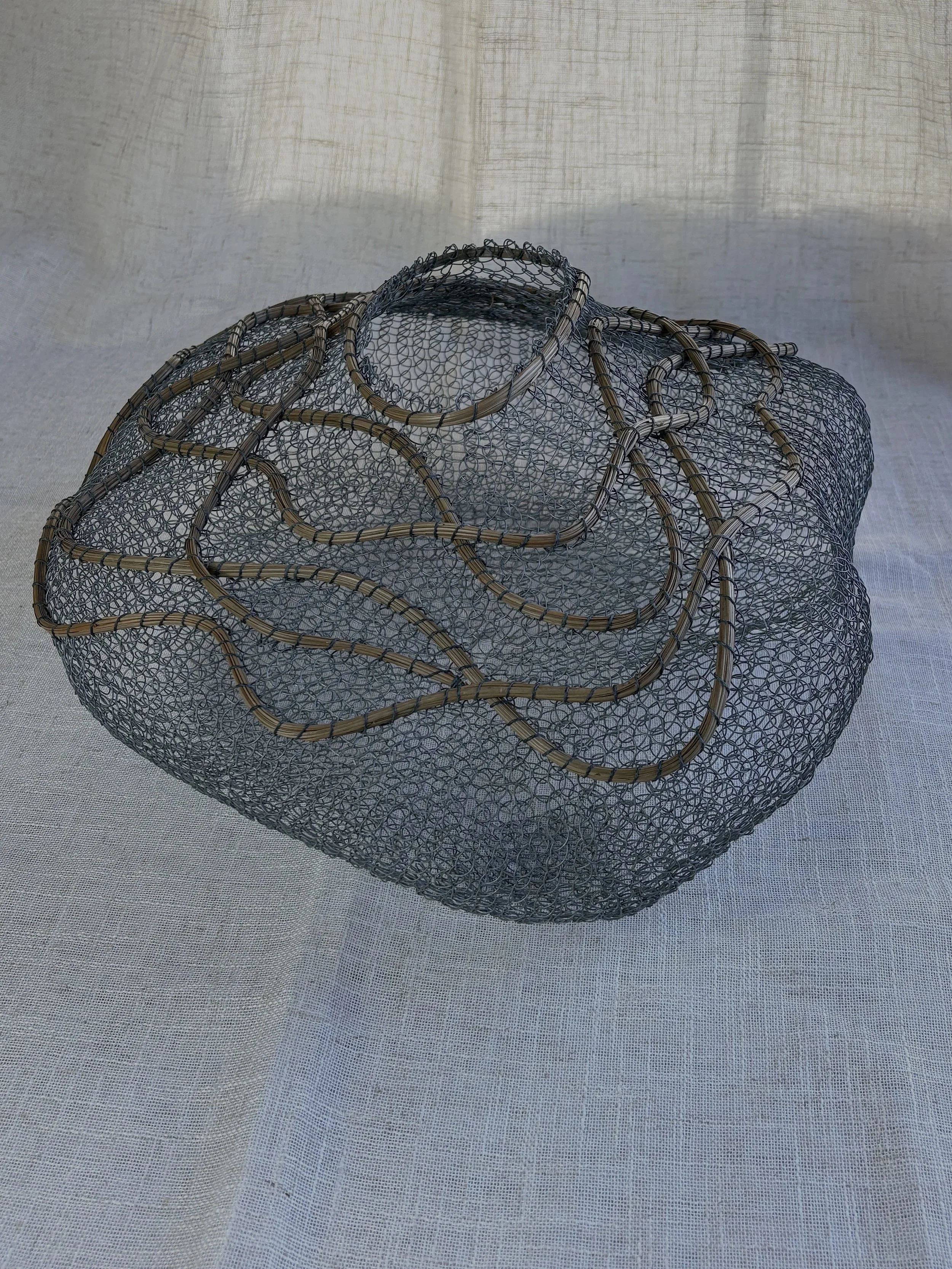
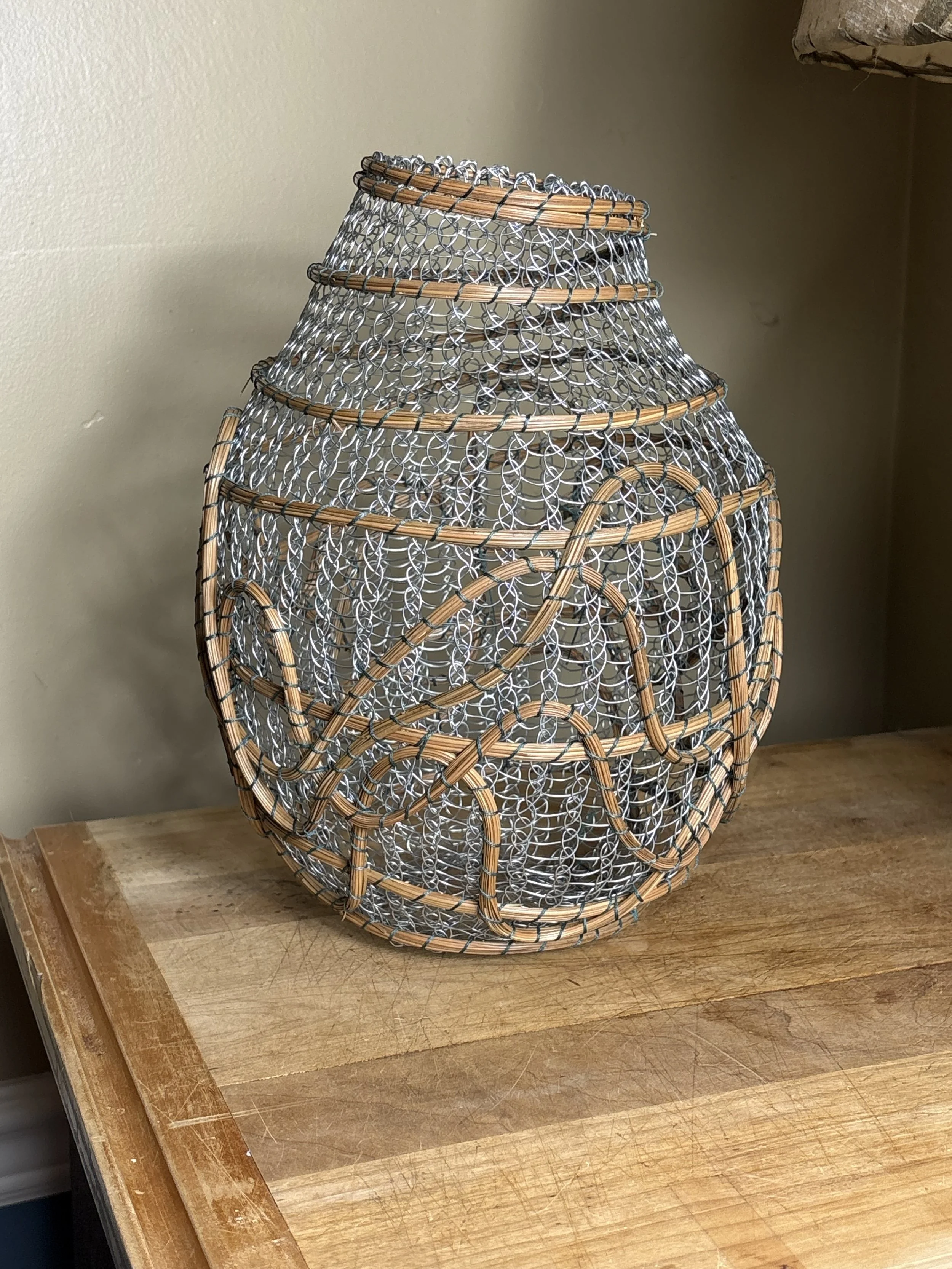
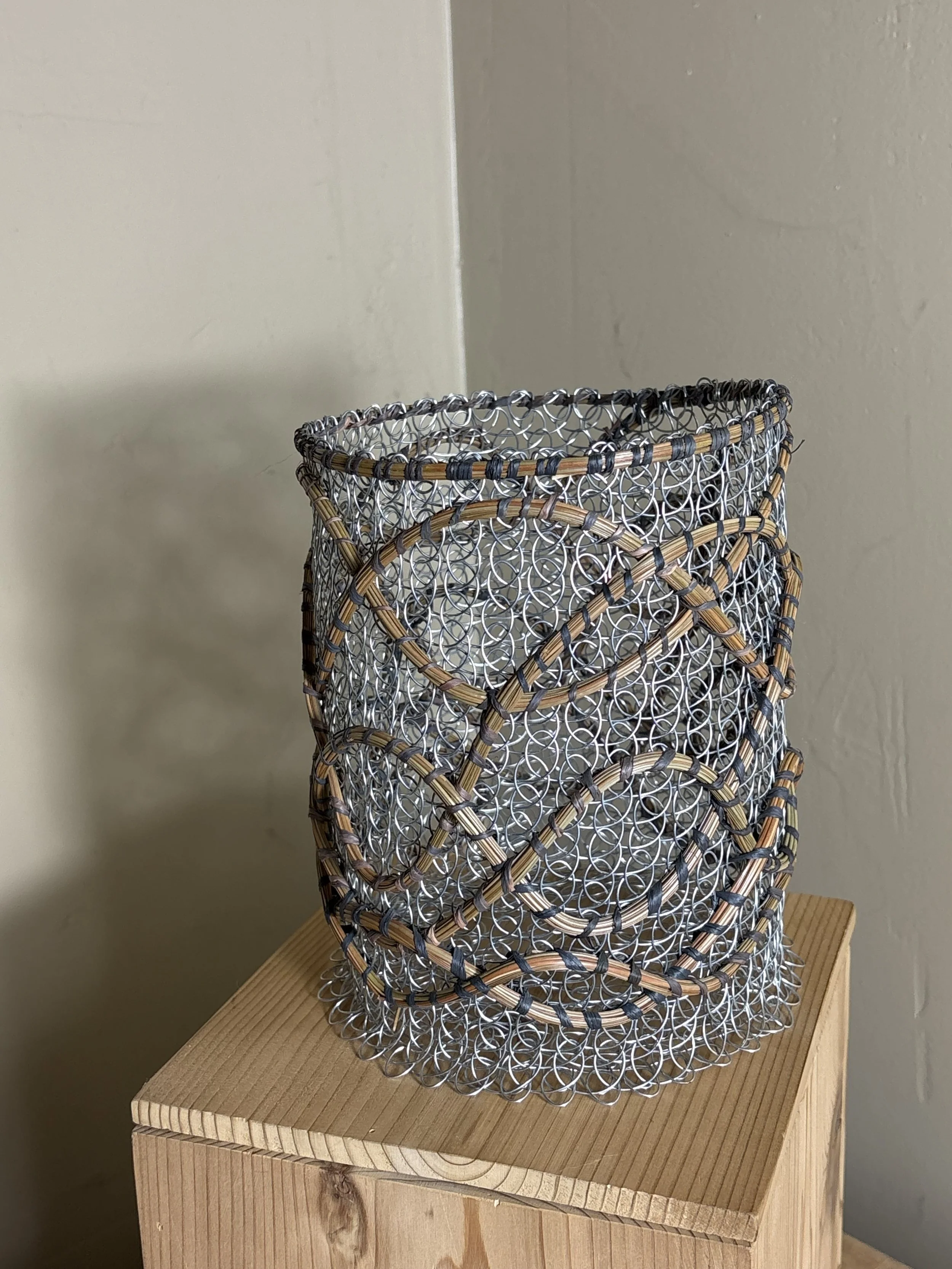
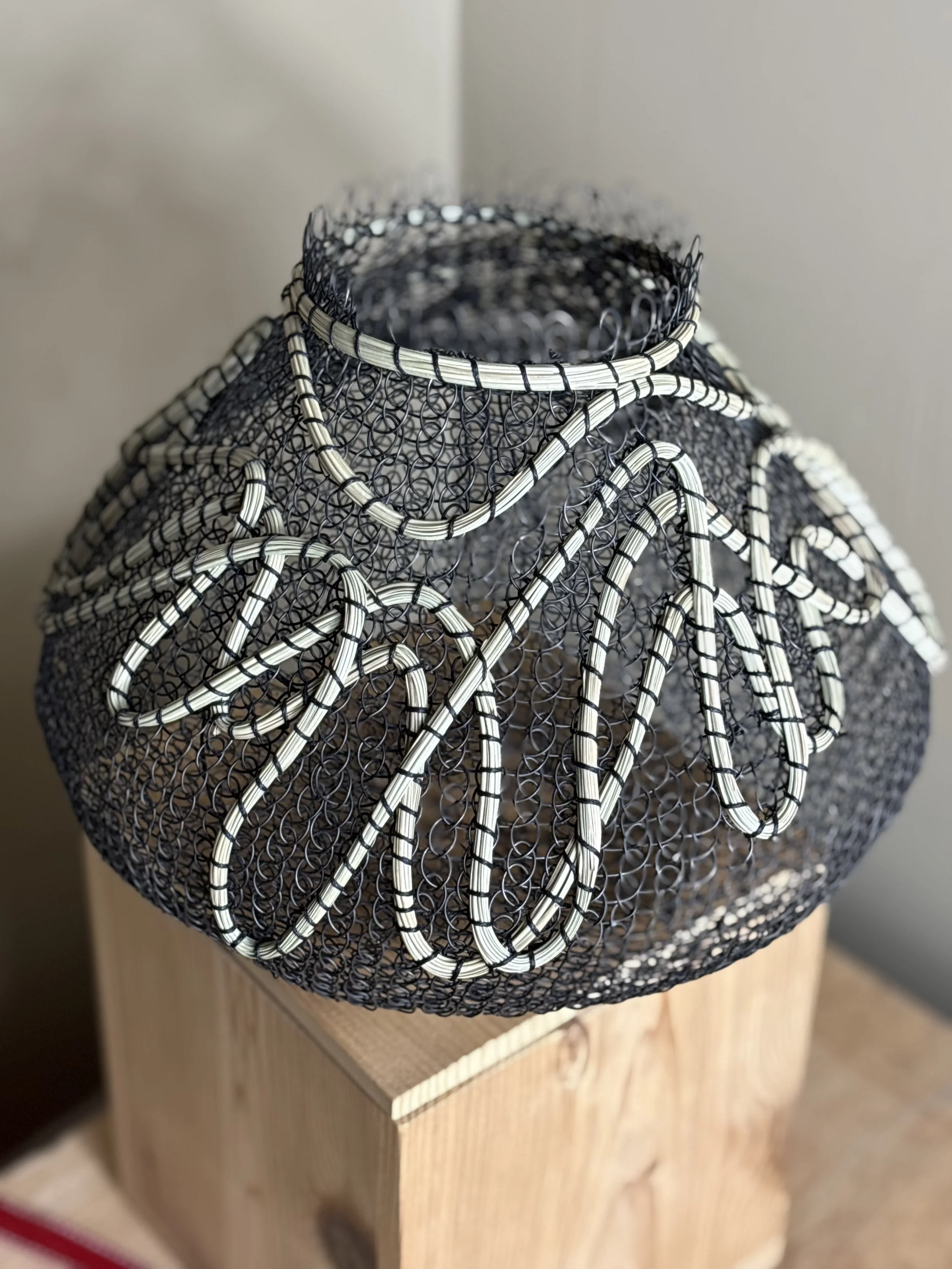
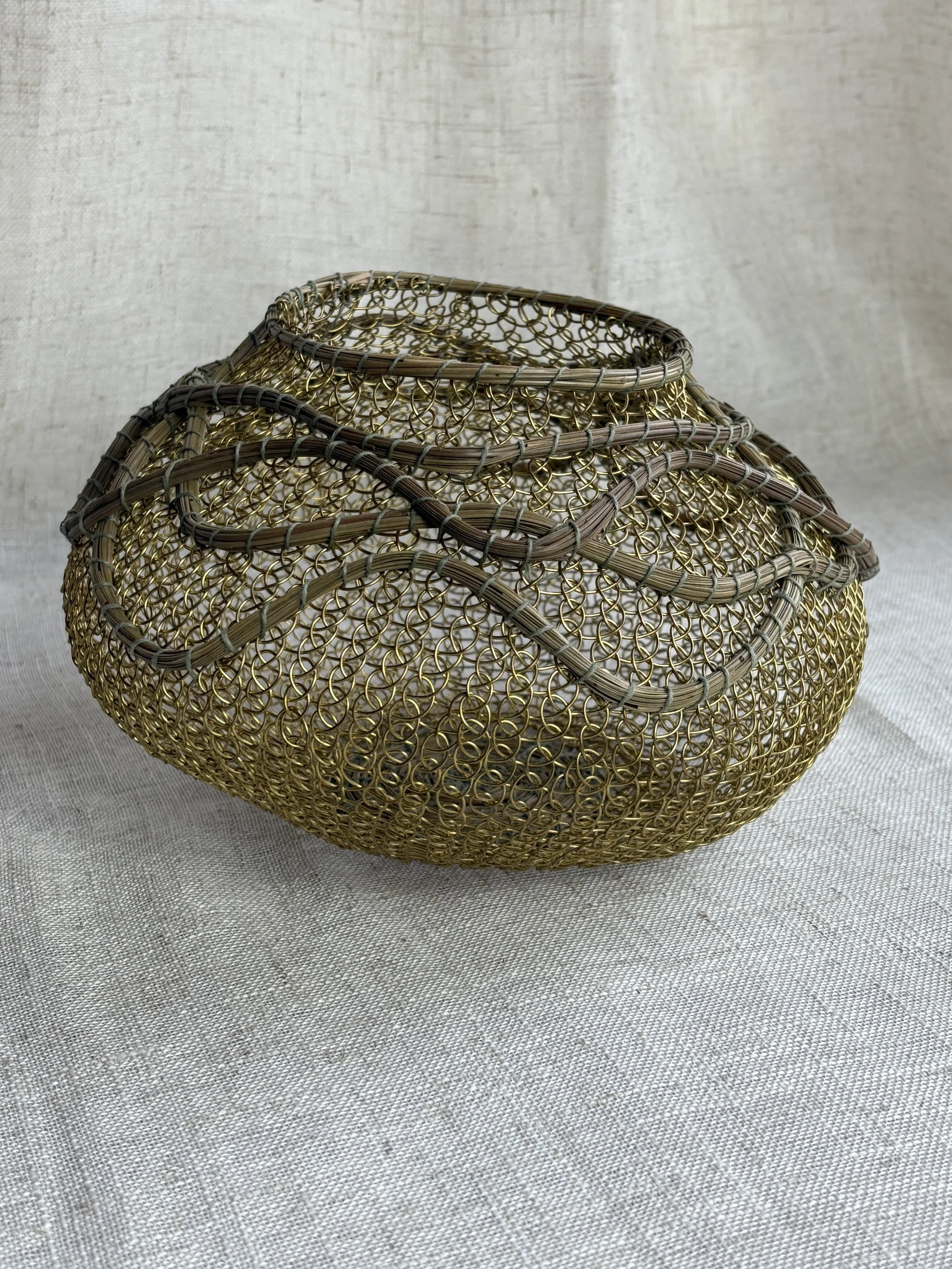
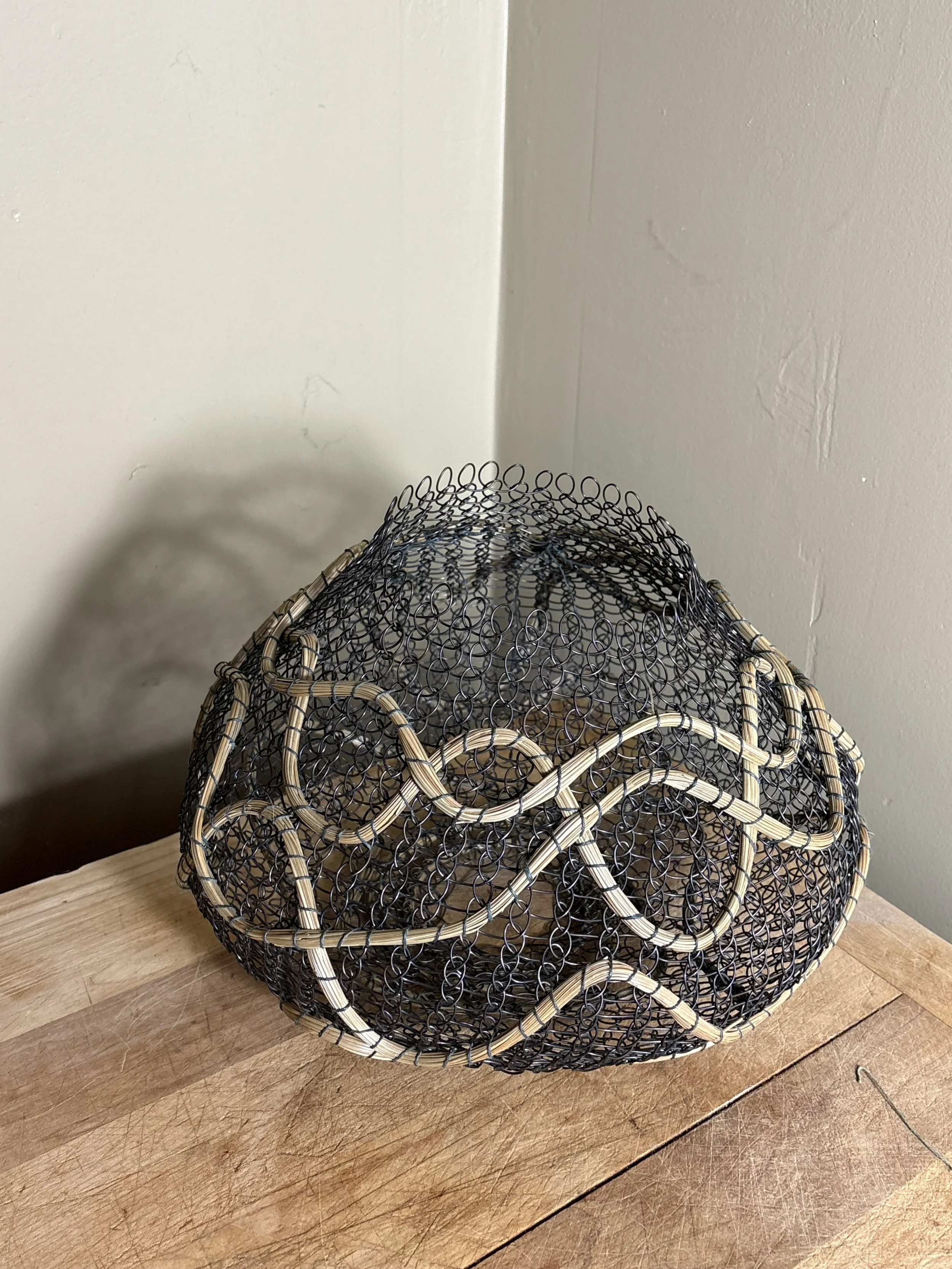
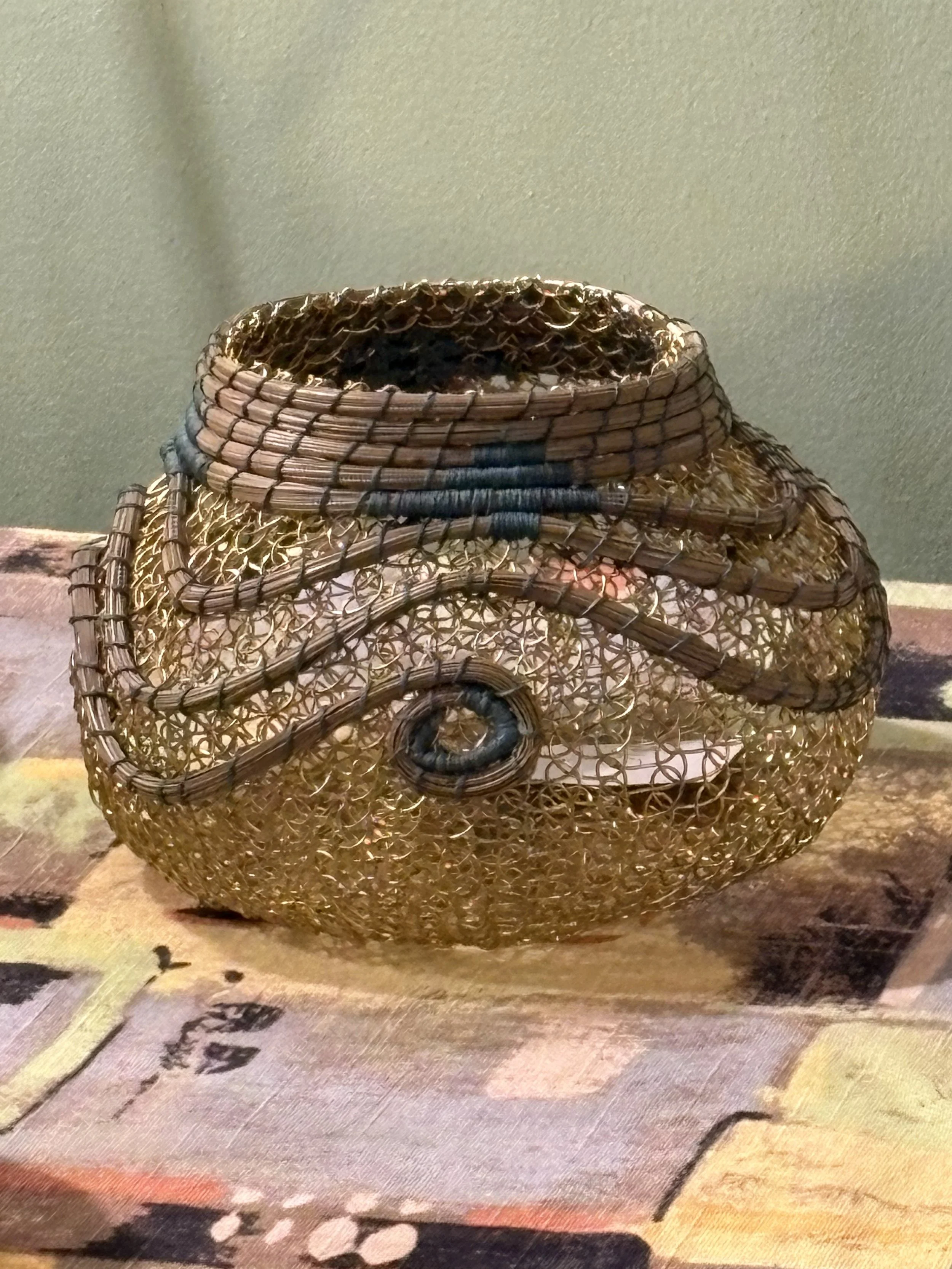
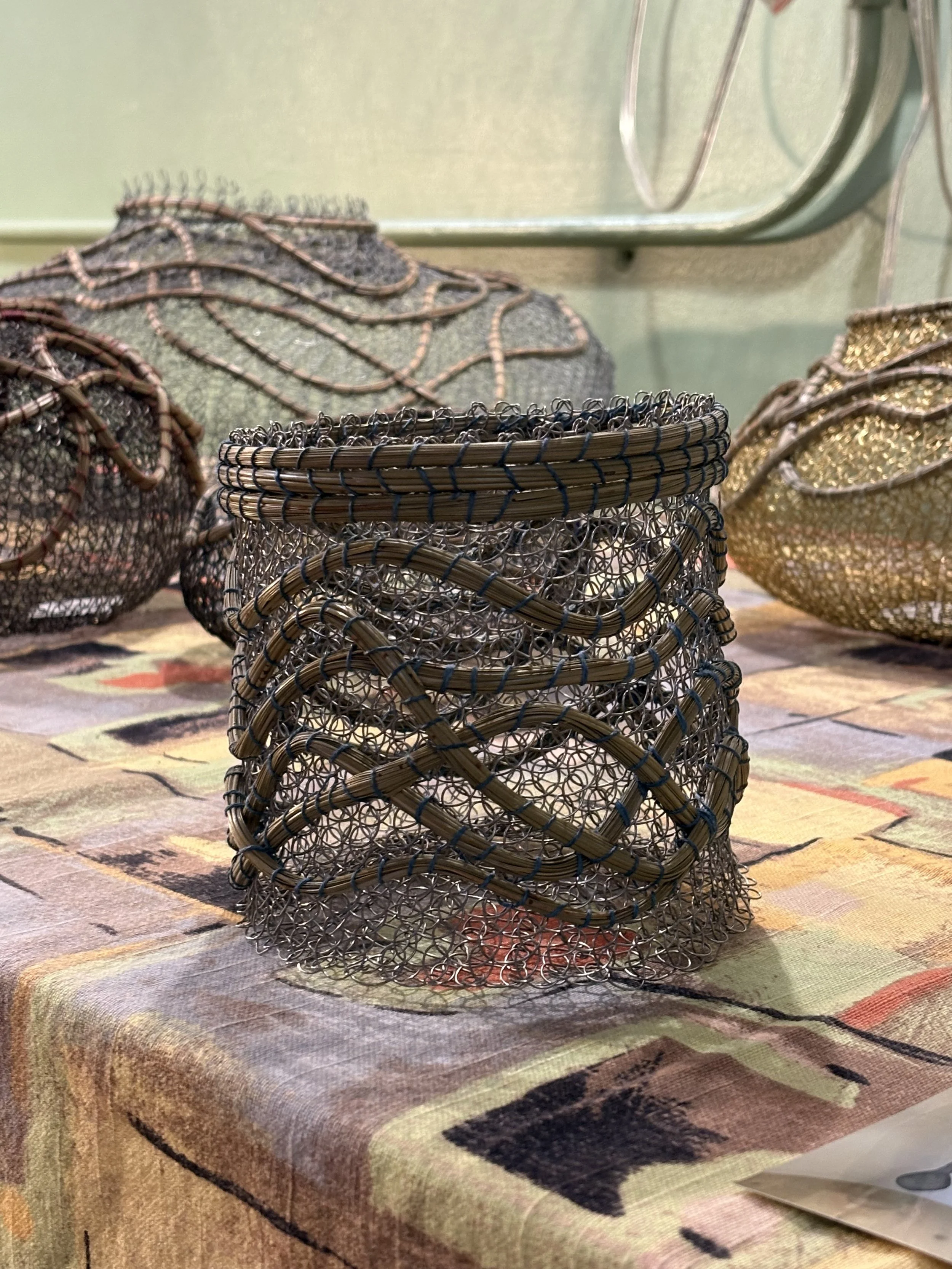
A sampling of wire basket forms with pine needles applied to the exterior in random designs using waxed thread. I began making these baskets in 2025 ignited by the wonder what it would look like if I … method. I let the inspiration guide me as I coil the long leaf pine needles around and along the wire looped bases. It’s what I work on the most. I love that it is a method and design that came from pure inspiration - a rare gift.
These baskets are not made to be particularly functional but they do hold items. I think of them as treasure baskets - holders of what is precious to its own because whatever you put inside will continue to be seen and treasured.

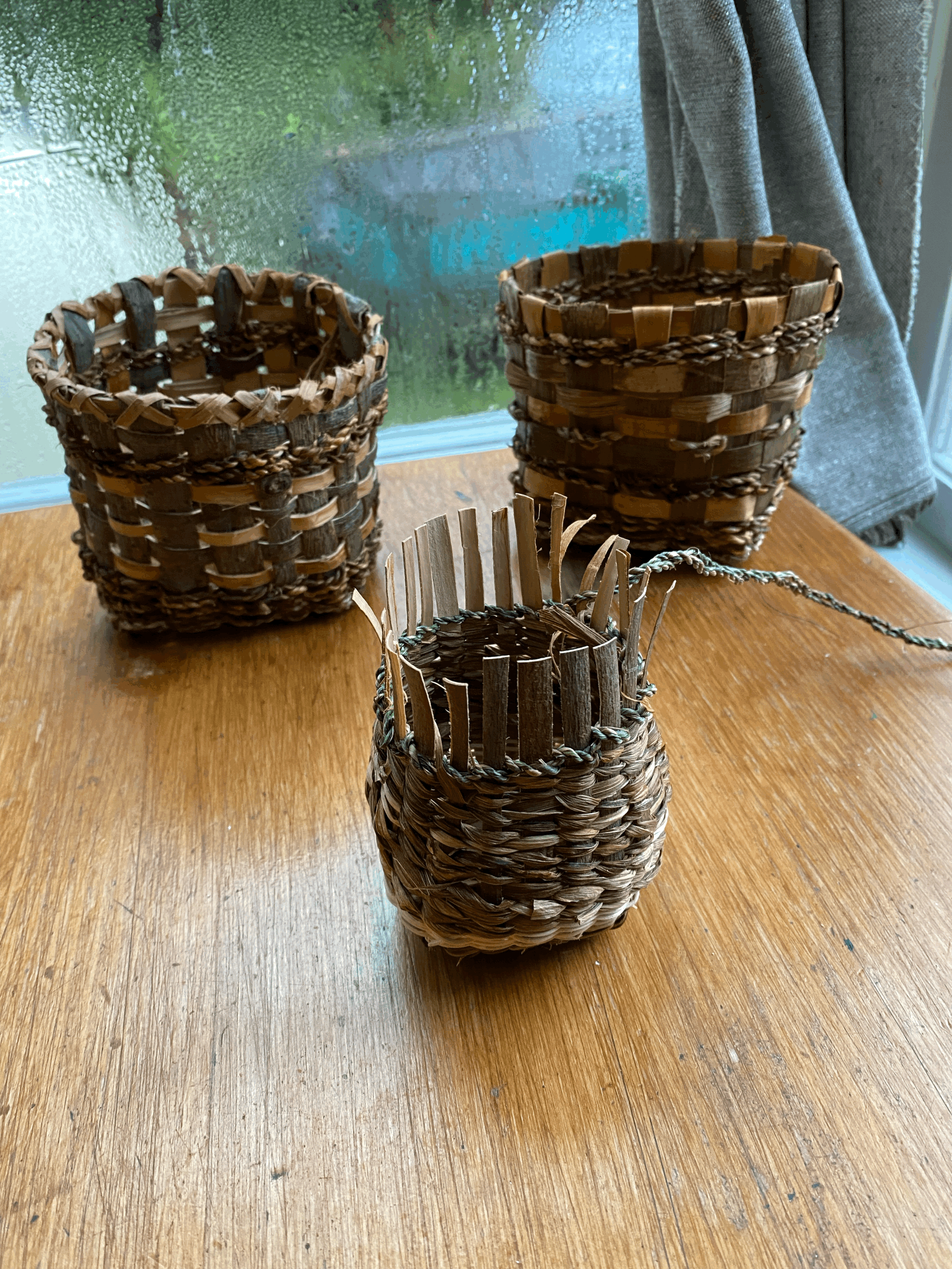
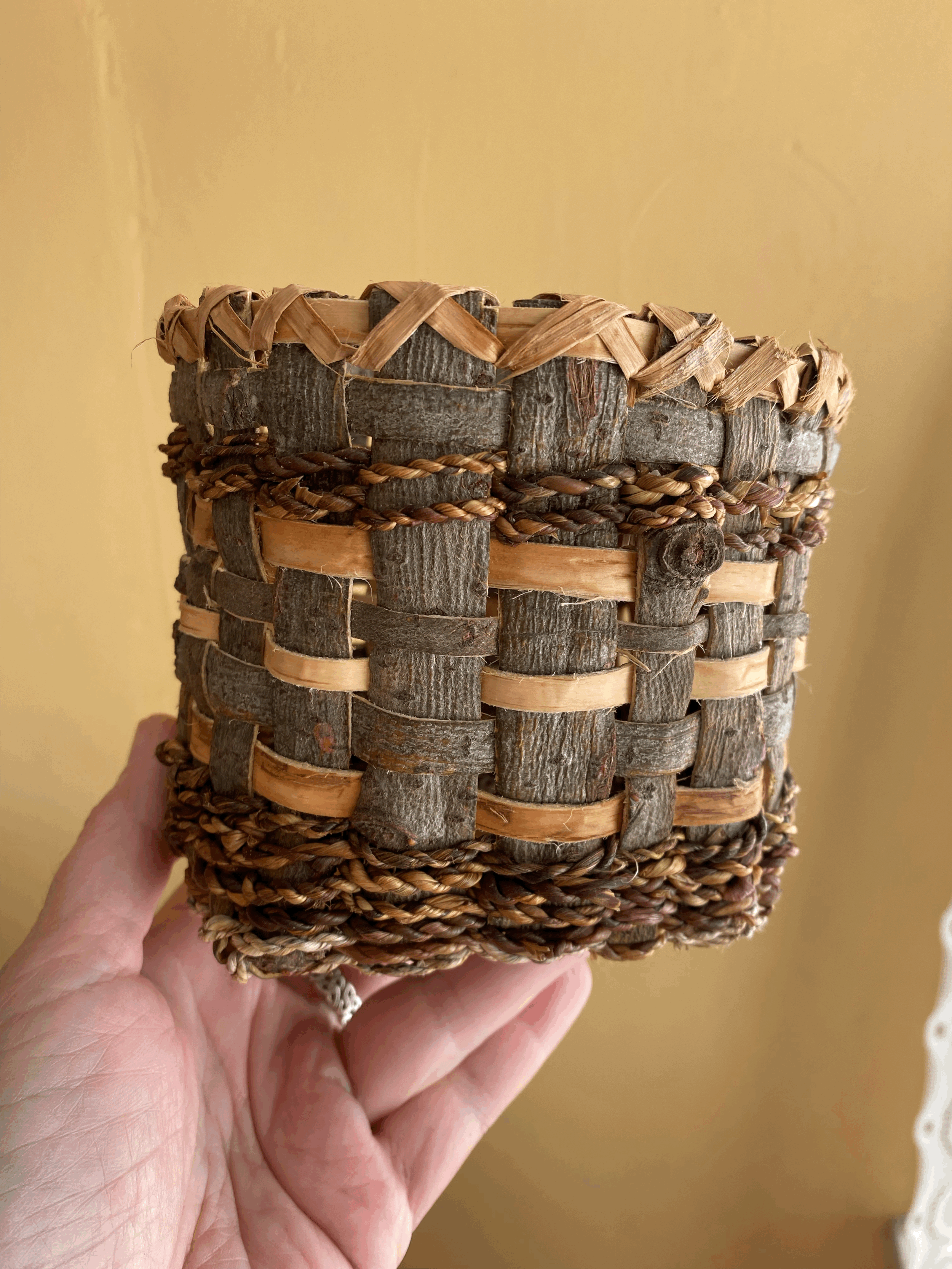
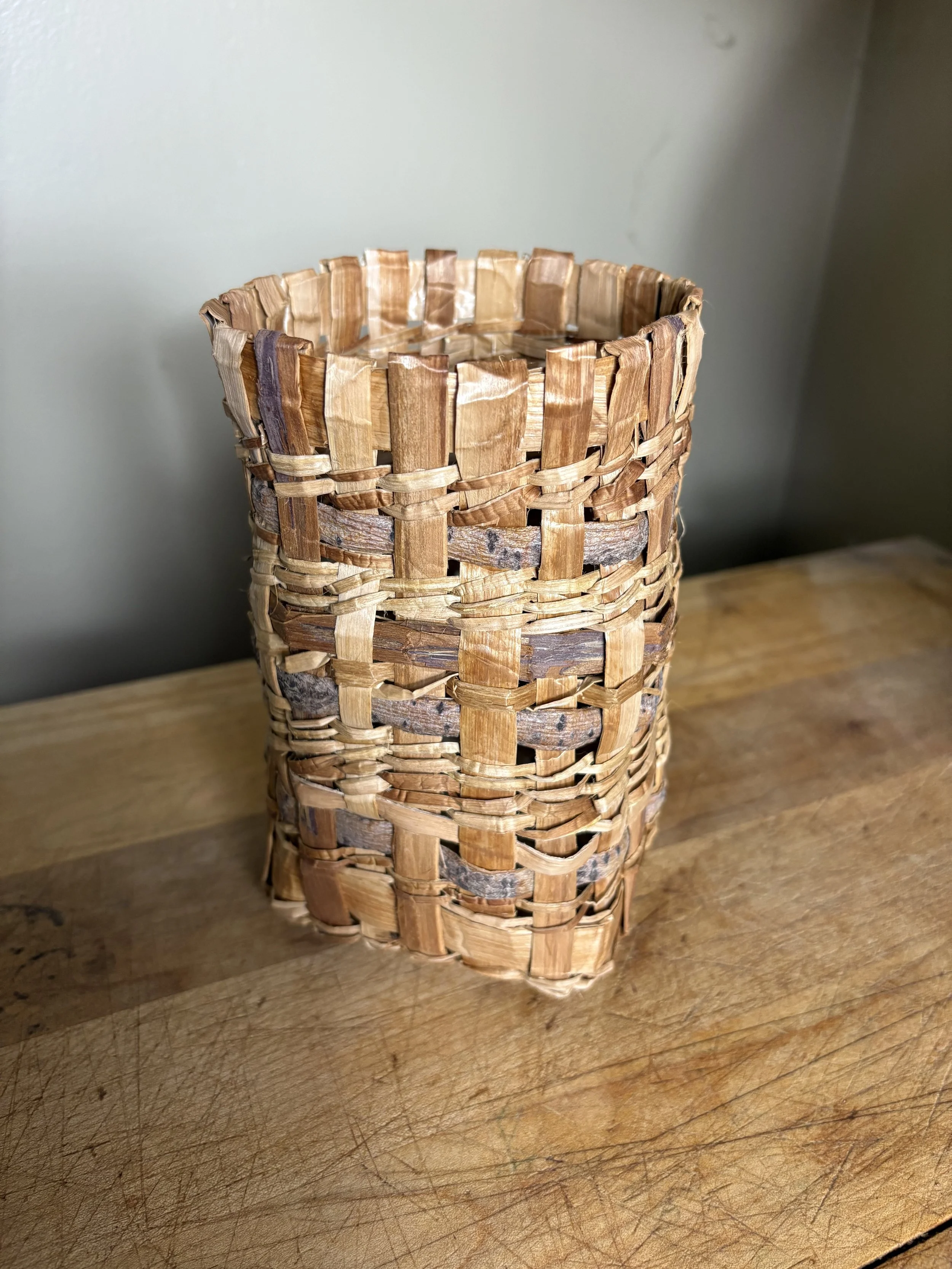
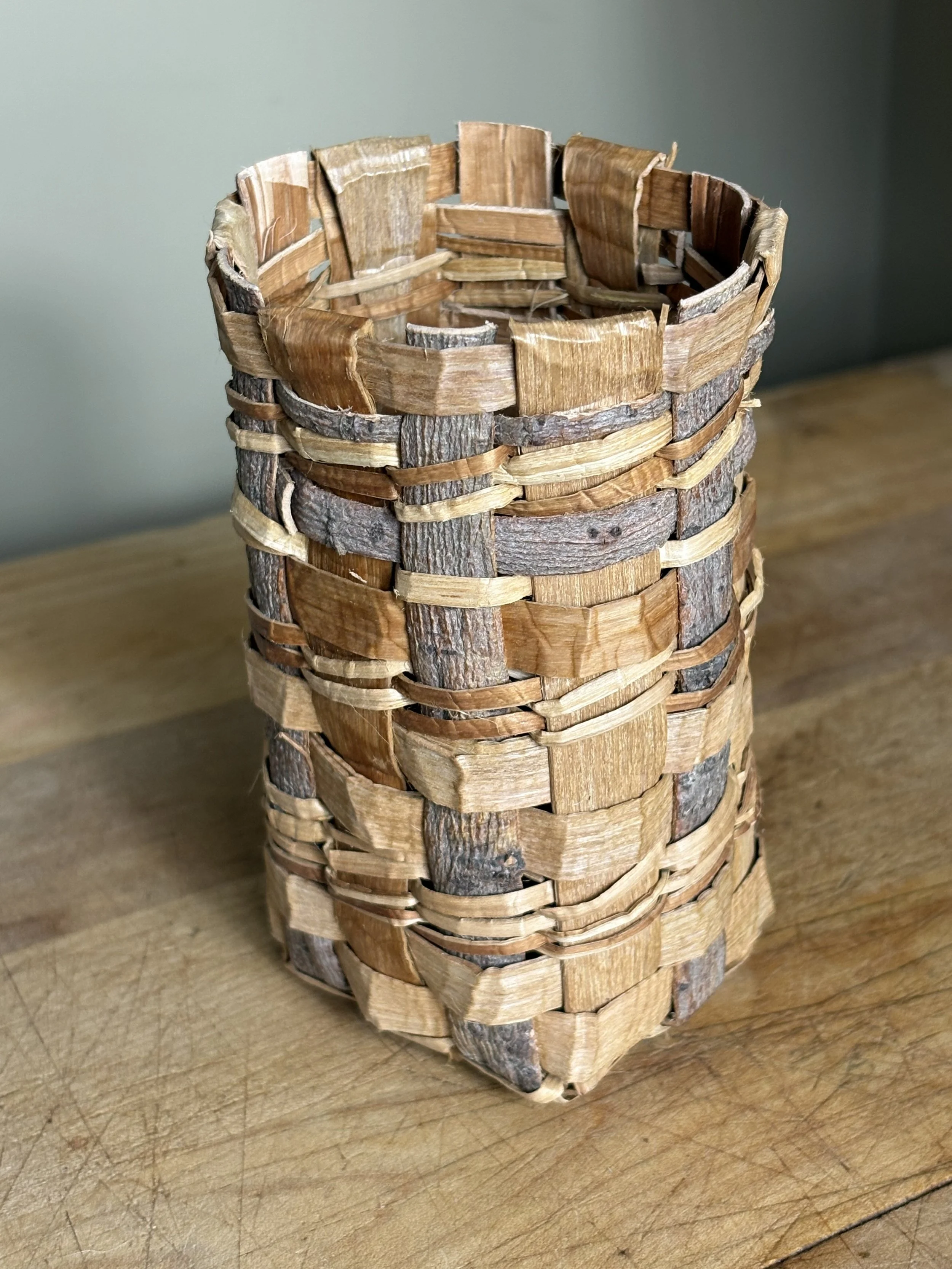
Here are a few woven baskets using willow and cedar bark and cordage made from dandelion stems.
These are among my first attempts at weaving with bark. More to come! I discovered cedar bark weaving at a Northwest Basketweavers Guild workshop. I immediately fell in love with it but had no easy source for the materials. So I learned that maple and swamp willow bark can be harvested in the spring when the sap is running. It lends a rustic beauty to the weave and I greatly enjoy working with it.
Last summer I saw a listing on a social media marketplace for cedar bark and was able to purchase a nice supply. The man selling it was from Alaska and told me his mother who lived into her 90s had been a weaver. Her husband - his father - would go out into the Alaskan forests and harvest cedar bark and enjoyed it so much he harvested more than she was able to use. I am so very grateful to have had the resources to purchase some of her supply.
I’m a member of the Columbia Basin Basketry Guild also. Each year in May, they offer an opportunity to harvest willow at a logging company in Tenino. It is the only processing yard in Western Washington that handles cedar. I went last May and learned first-hand the hard work involved in stripping bark from harvested logs. I will be doing it again this year.
I also try to strip bark on other types of trees that need pruning. I planted a zebra bark maple a few years ago and will begin annual pruning next spring with the hopes of adding a new texture to my basketry. I am also experimenting with the eucalyptus trees I’ve planted in my yard. And I grow day lilies, daffodils, and iris knowing that their leaves can be harvested and used for weaving.
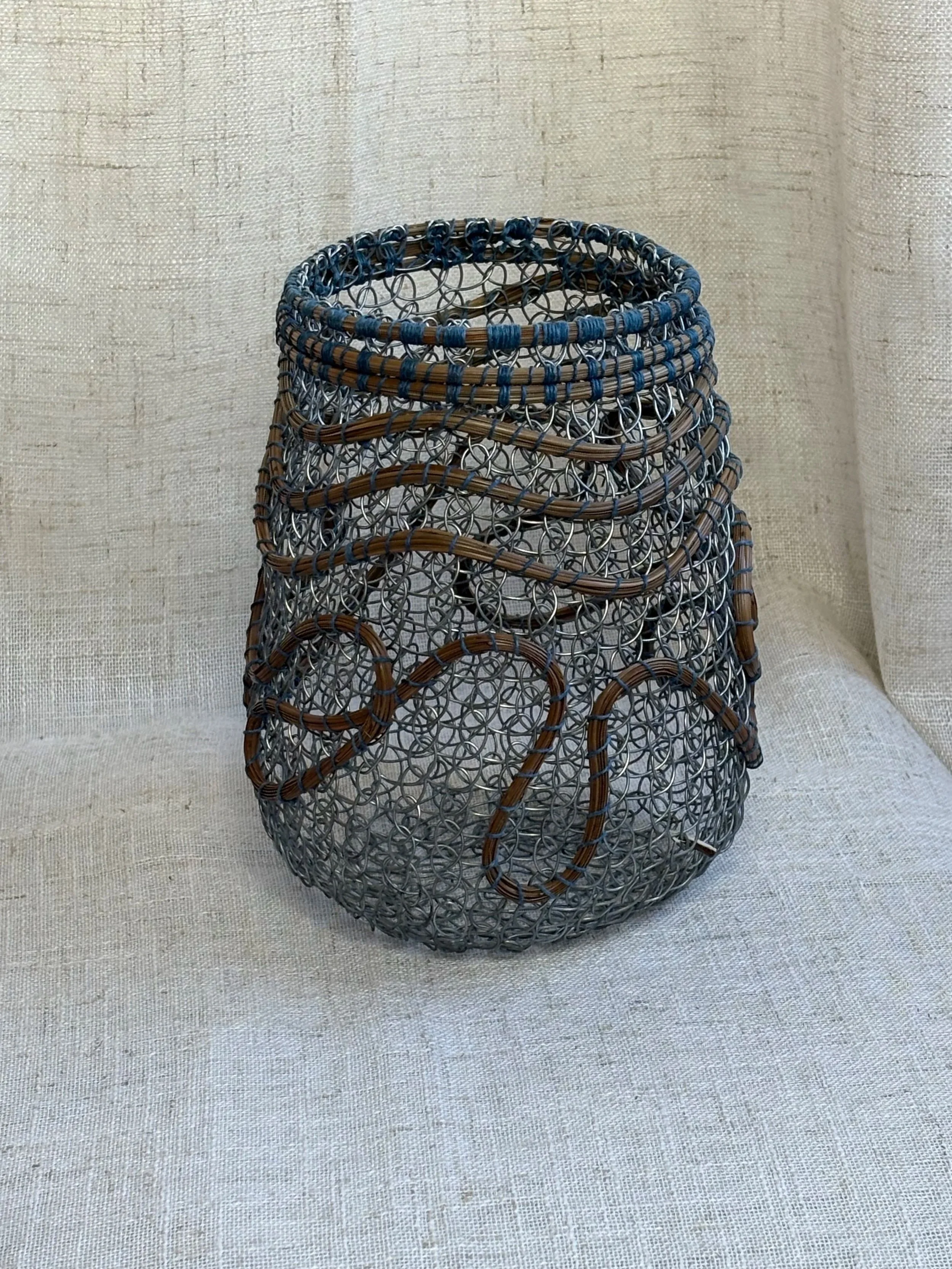
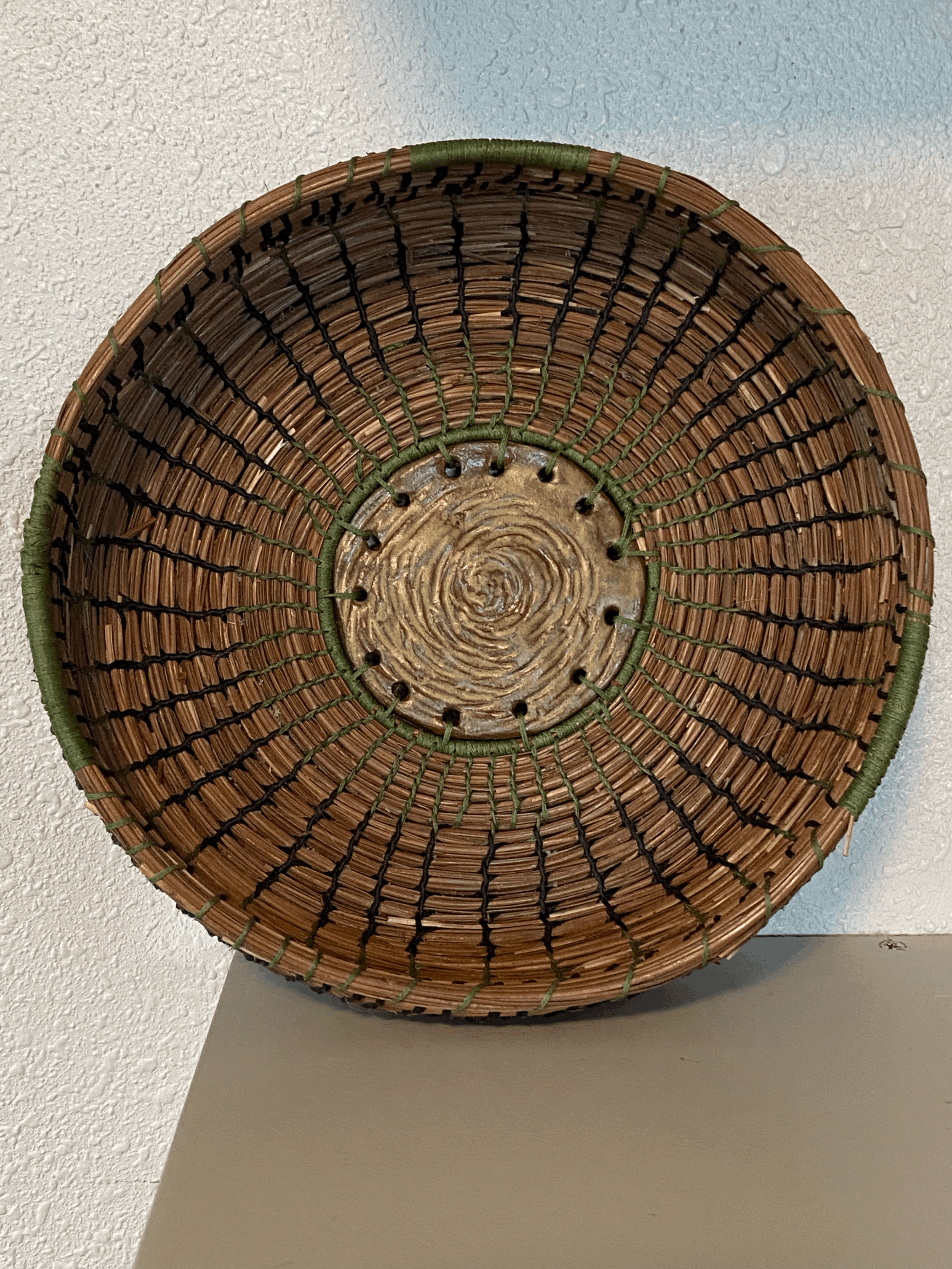
Also I’ve included a photo of a pine needle basket. I stumbled into learning pine needle coiling at a Native American Basketweaving Conference hosted by the Puyallup Tribe of Indians a few years ago. I had little interest in pine needle coiling but that interest quickly changed to borderline obsessive love! I also work with clay so the center of this pine needle basket is a ceramic disc I made as a base. As you can see from the images above, I discovered a new way to work with the pine needles and the wire looping I use to make the sculptures.

Weaving with Willow - Learning Stages

Willow is a beautiful material. I am attracted to it because of its history in the Celtic or Irish culture. My grandparents on my father’s side were Irish immigrants so I feel a sense of heritage that keeps me on the learning curve with this often very difficult medium.
There are a few dedicated growers in Western Washington who grow a variety of willow, each with its level of weave-ability. Willow has to be soaked for days and then left to mellow before I can weave with it. The processing is equally part of the art of making as the weaving. If it is not soaked properly it remains brittle and can’t be used.
It takes hand strength and hours of dedication to complete one basket. I am committed to continue learning and becoming more skilled.
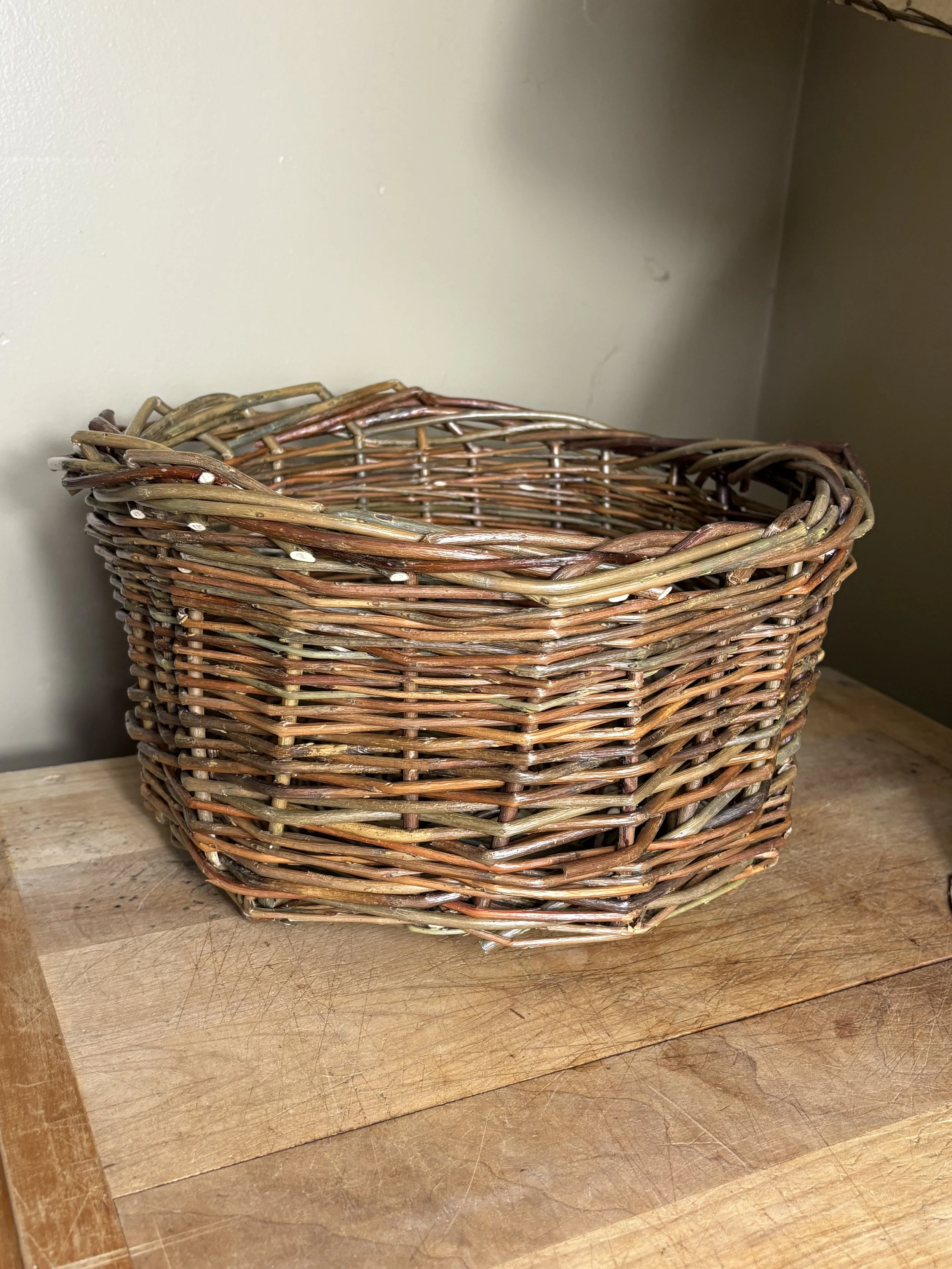
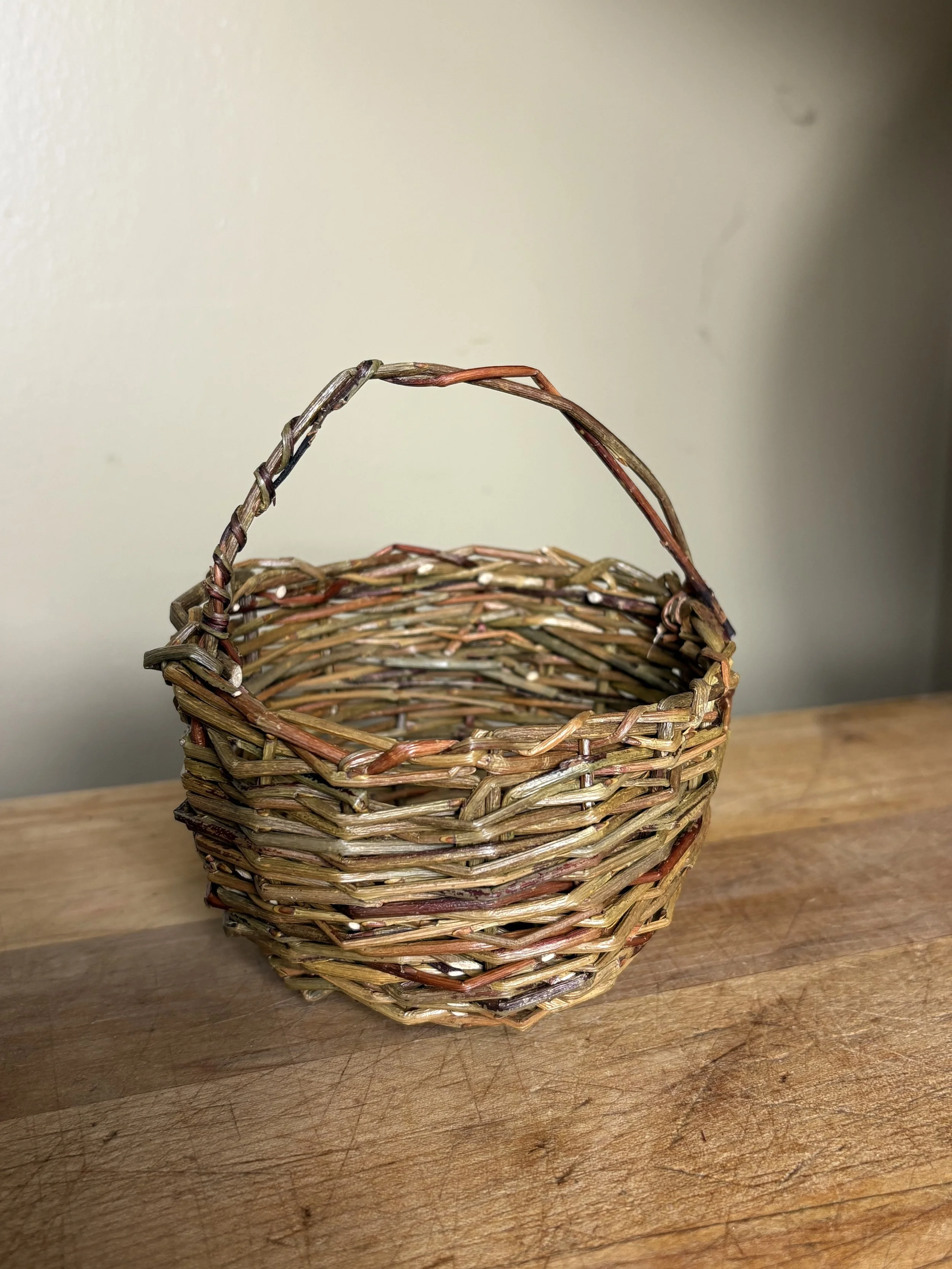
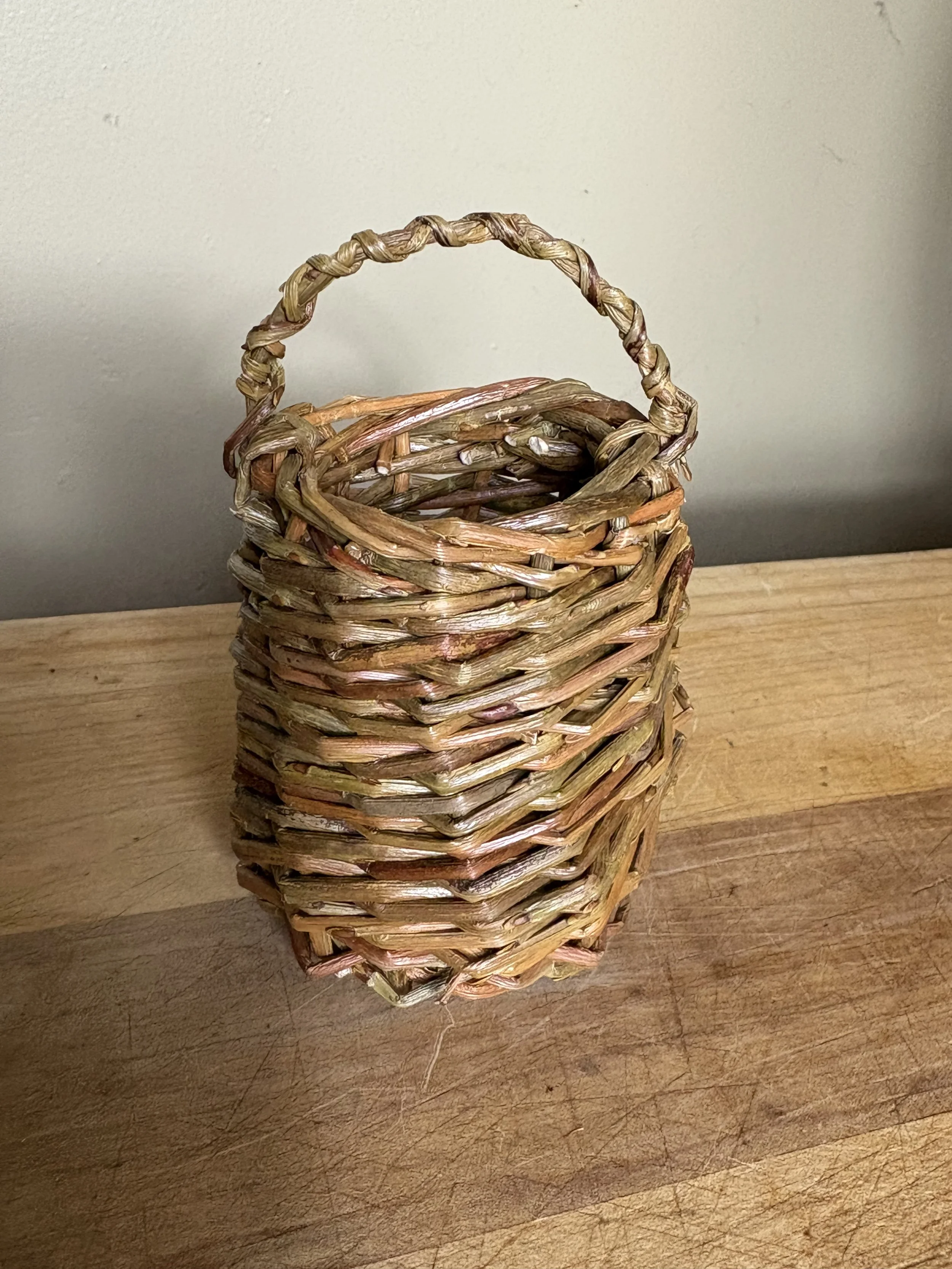
I am in learning mode with willow weaving. These are what I’m calling my starting points with the hopes that I will develop an ease with the willow with more practice. The two with handles are tiny - about 3 to 4 inches tall. I find it much easier to work with small thin willow and there are plenty of leftover pieces after making a larger basket like the 8 to 10 inch ones shown here.